 Sedona Vortex
Sedona vortexes
In Sedona lore, a vortex is a place where the earth’s energy swirls, said to help with meditation, healing and reflection. The idea took hold around 1980, when a spiritual channeler named Page Bryant named the first sites, and Sedona has drawn seekers ever since.
There are said to be many vortexes around Sedona, but four main ones: Bell Rock, Cathedral Rock, Airport Mesa and Boynton Canyon. Each is said to have its own kind of energy. Scientists haven’t measured anything unusual at them. The views are real either way, and all four are worth the walk.
The four main vortexes
- Boynton Canyon
- Balanced energy
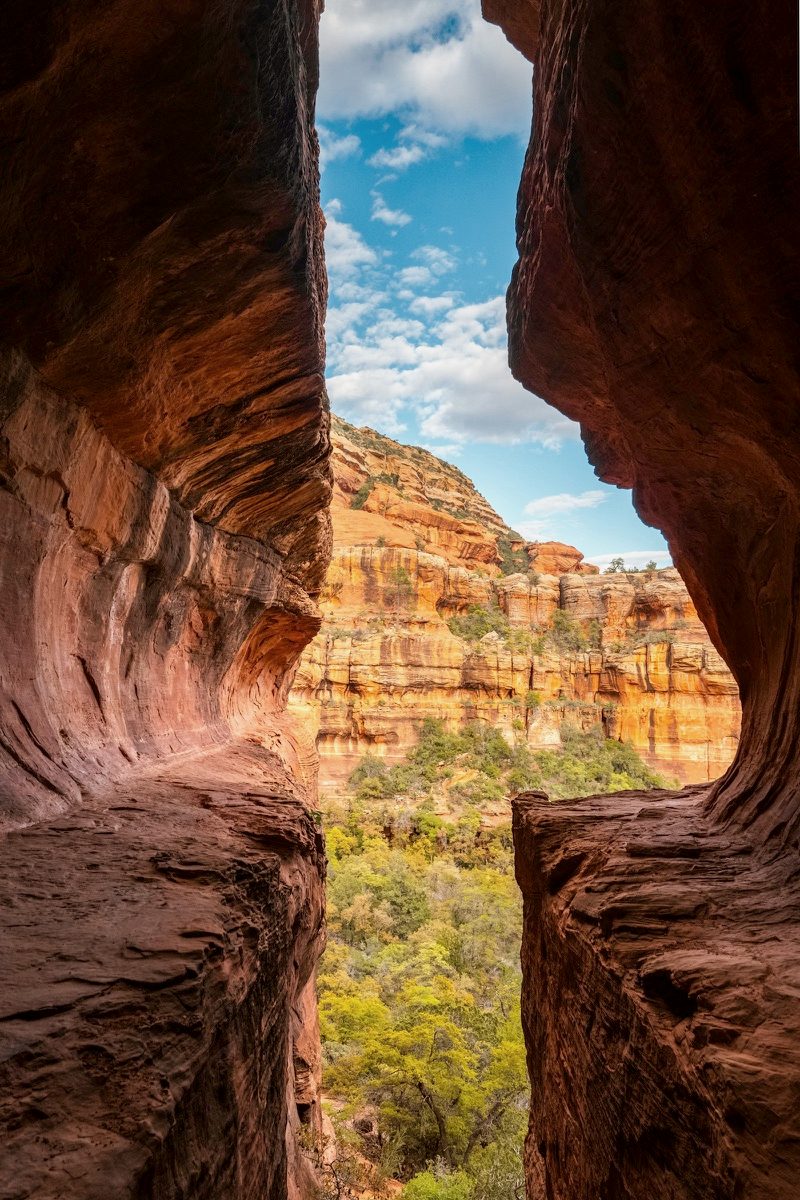
Boynton Canyon is a quiet red rock box canyon in West Sedona. Its vortex sits on a short side trail near the trailhead, between two rock knobs below the tall Kachina Woman spire.
Parking: Likely full - Cathedral Rock
- Feminine energy
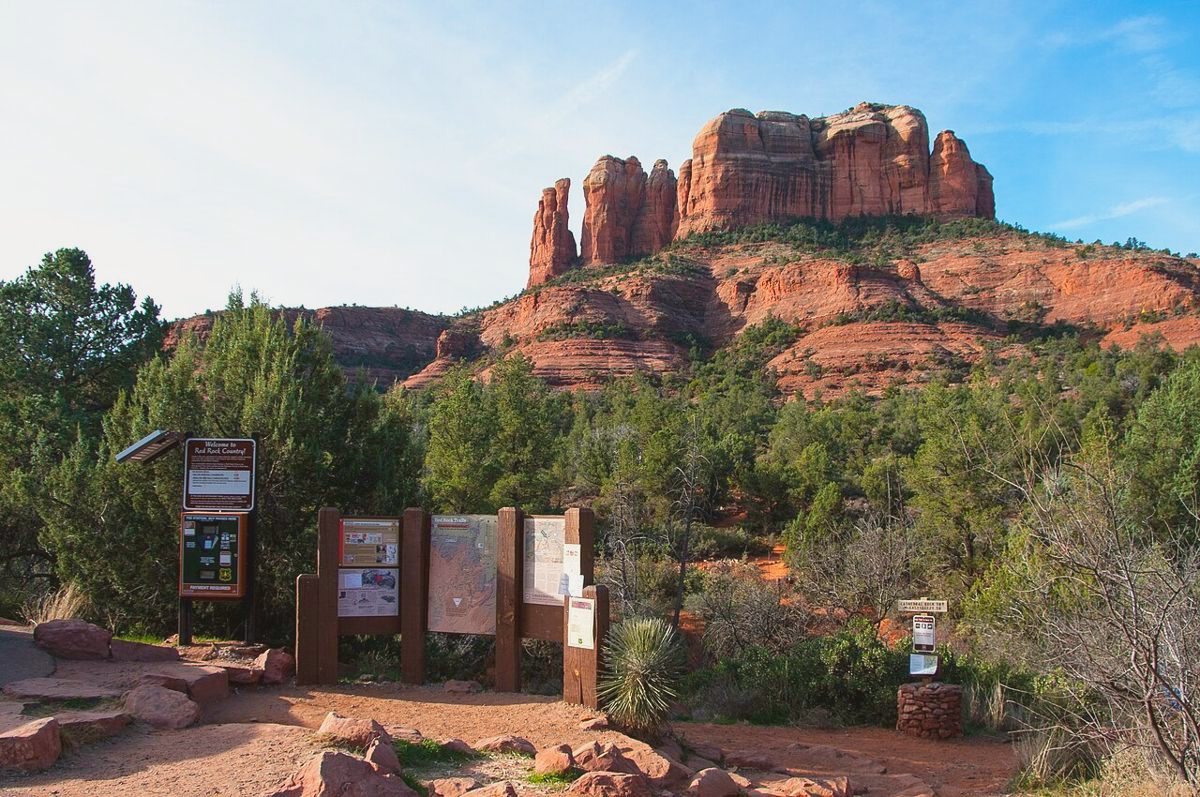
Cathedral Rock is Sedona’s most photographed formation and, for many visitors, its most powerful vortex. Reaching it is a short, steep scramble up bare rock to the saddle between its spires.
Parking: Shuttle only - Airport Mesa
- Masculine energy
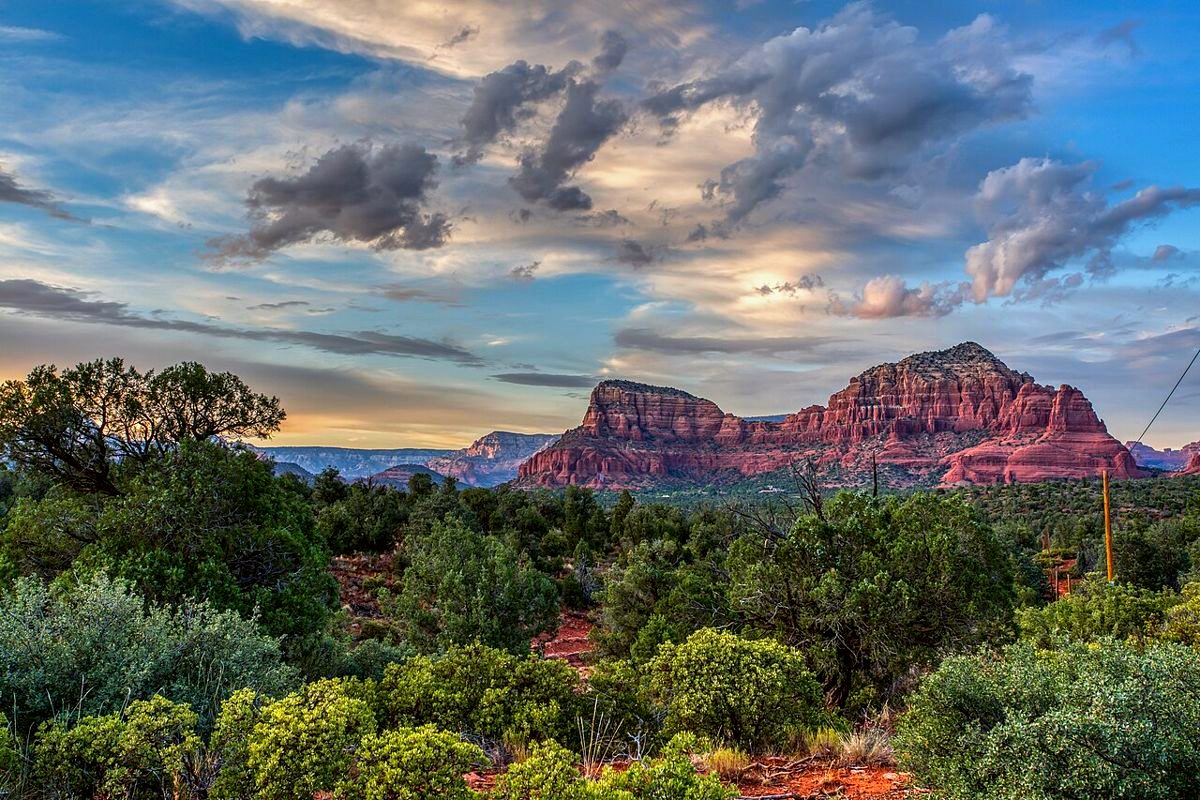
Airport Mesa is the vortex closest to town, a short, steep climb from a small lot on Airport Road with a view over all of West Sedona. It is the most visited vortex, and the busiest at sunset.
Parking: Likely plenty of spots - Bell Rock
- Masculine energy
Bell Rock is the easiest of Sedona’s four main vortexes to reach: it stands right beside SR 179 at the north end of the Village of Oak Creek, and you can feel for its energy a few minutes from the car.
Parking: Likely full
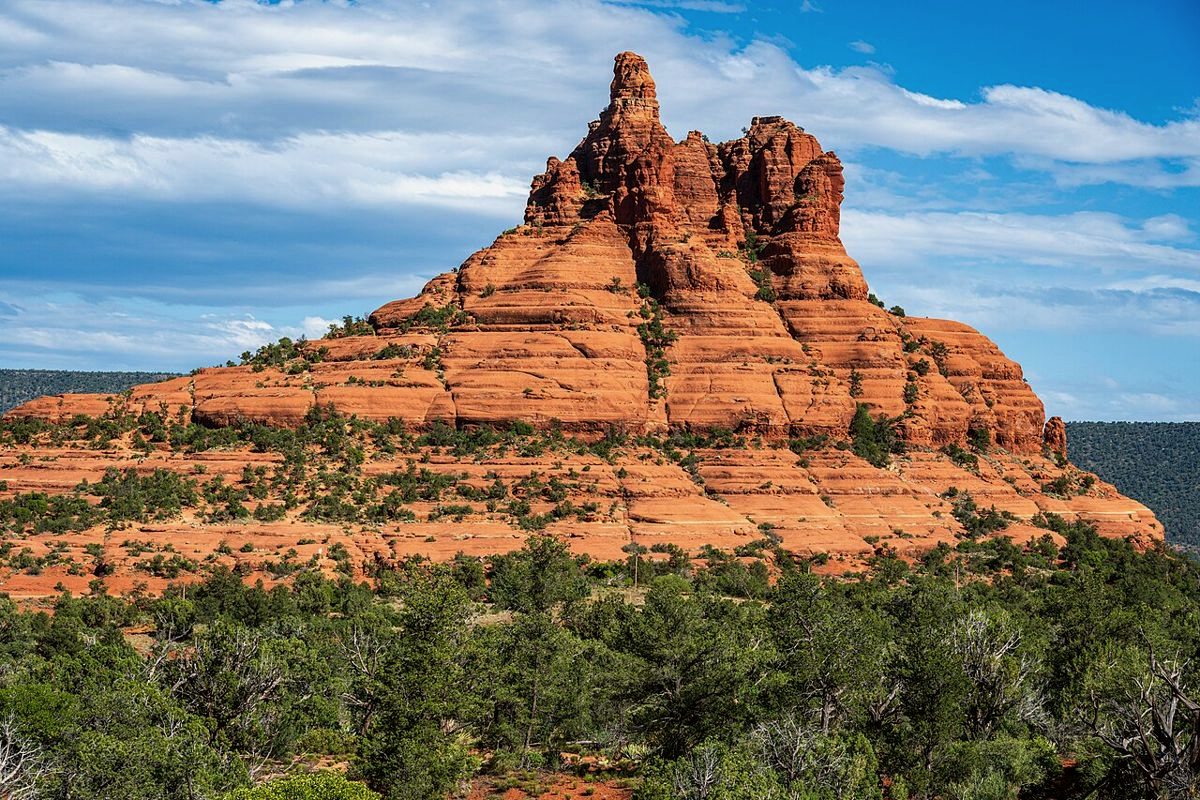
Which vortex should you visit?
- Easiest: Bell Rock, a short walk from either lot, and Airport Mesa, a few minutes’ climb from Airport Road.
- Hardest: Cathedral Rock, a steep scramble on bare rock. Thursday to Sunday, ride the free shuttle.
- For sunset: Airport Mesa, if you arrive early.
- For quiet: Boynton Canyon early in the morning, or any of them at sunrise.
Follow the meter
The Sedona Vortex app has a vortex meter that points you toward the nearest vortex and rises as you get closer, plus parking for every trailhead and a map that works with no signal.

Vortex lore is lore. Trail and parking details are real: carry water and check conditions before you go.